Vacuum is a method of natural food
preservation that consists in removing air
from the pack, eliminating oxygen, the
principal food spoilage agent.
Advantages of vacuum-packing
1- Maximum reduction of product
wastage.
2- Maximum return from labour hours by
making good use of any idle times
occurring within the week in order to
speed up work and to quicken the
process flow in the kitchen.
3- Rational storage of products in cold
rooms:
- Odors will not mix up.
- Products can be labelled, which
facilitates the turnover of raw
materials.
- Improvement of inventory control,
since anything to be purchased at a
given time can be determined with
greater accuracy.
4- Exploitation of the best-to-buy days:
- Shopping can be made when prices are
lower.
- Less travels are needed.
5- Less washing-up.
Packing of cured products (sausages,
hams, etc.)
These per se durable products can see their
shelf-life at least doubled when vacuum-
packed. Vacuum-packing also prevents
them from drying up or losing weight,
which would entail an economic loss.
Except for some that are fragile in texture,
these products require no gas injection.
Packing of cooked food
This concerns such food as roast meats,
stews, cannelloni, etc. Once cooked, these
products must be cooled down to the core
from +65ºC to +10ºC in less than two
hours, in order to prevent microorganisms
from developing.
Vacuum-packing is perhaps the most
practical method of maintaining traditional
cooking with these advantages:
- Easy food processing, without risk of
product spoilage.
- Longer product life.
Cooking of vacuum-packed food
Put food into a tight and heat-resistant
container. Remove any air from the inside,
seal the container and heat it to cook the
food inside. Cooking is done at low
temperatures (65ºC to 100ºC), producing a
pasteurising effect. This process has many
advantages. Indeed, among others:
- it maintains the nutritional values.
- It safeguards hygiene, as there is less
handling.
- It reduces weight loss, by preventing
evaporation and drying.
- It allows rational work planning. Food
processing and cooking outside service
hours; preparation of banquets in
advance, etc.
- It increases the storage time.
Food must be cooled down immediately
after cooking, in order to stop the cooking
process and to prevent the growth of
microorganisms. Cooling is achieved with a
temperature reducer.
Refrigerated foods: Temperature at the
core of the product must descend from
+65ºC to +10ºC in less than 2 hours.
Frozen foods: Temperature at the core of
the product must descend from +65ºC to -
18ºC in less than 4.5 hours..
Thereafter, food is to be kept at a
temperature of 0ºC to 3ºC as for
refrigerated dishes and of -18ºC if frozen.
When so-packed food is to be prepared to
be savoured, the reconstitution process
must start immediately after taking the
pack out of the fridge or freezer. Basically,
there are three reconstitution techniques:
the low-pressure steam oven, a bain-
marie, and a microwave oven. In the first
two cases, food can be reconstituted within
their packing, while the bag must be
perforated or removed for reconstitution in
a microwave oven, so that steam can
escape without the bag bursting.
Any reconstituted product that is not
consumed may not be stored again and
must be disposed of.
Refrigerated food should not be stored for
more than 6-21 days.
Freezing of vacuum-packed food
Conventional freezing techniques allow
keeping the product, but not all of its
qualities. Freezing vacuum-packed food
has many advantages:
- No external frostbiting
- No surface frosting
- No loss of taste or aroma
- No drying
- No oxidation of fats
9
ENGLISH
THE BASICS OF VACUUM-PACKING TECHNOLOGY


Participe da conversa sobre este produto
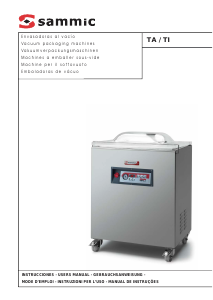
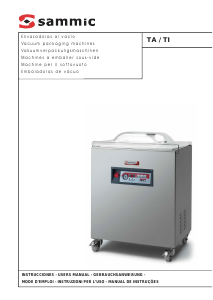
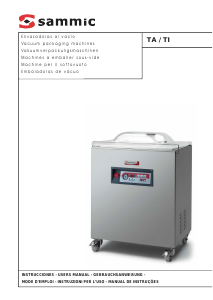
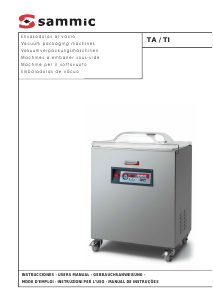
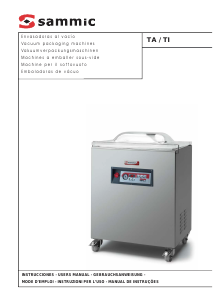
Aqui você pode compartilhar o que pensa sobre Sammic V-421 T Máquina vácuo. Se você tiver alguma dúvida, primeiro leia atentamente o manual. A solicitação de manual pode ser feita através do nosso formulário de contato.